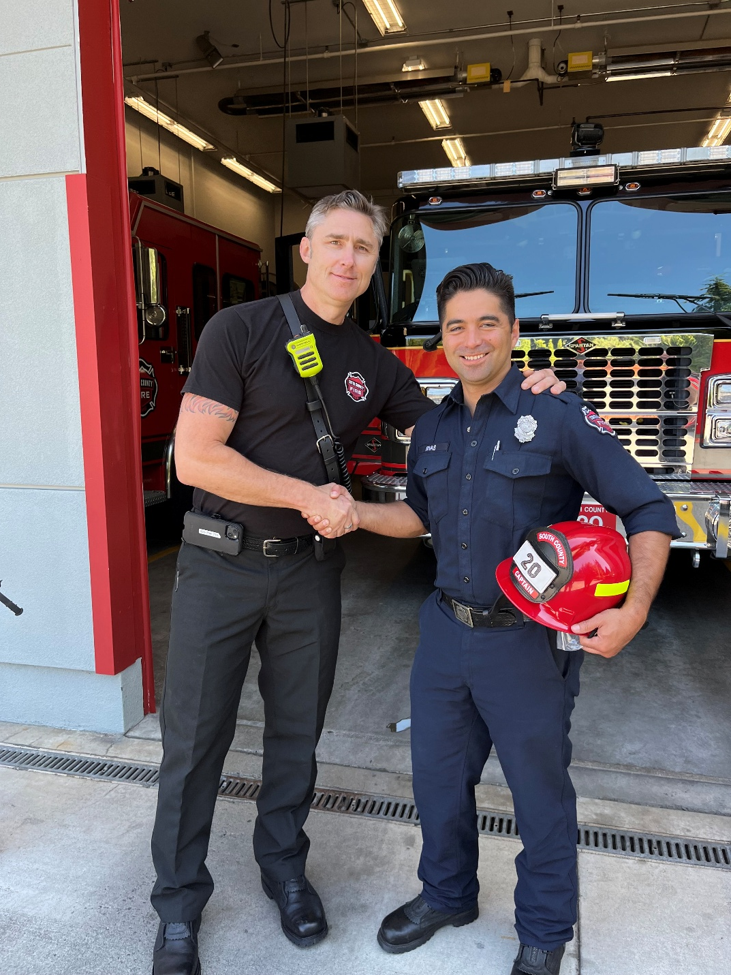
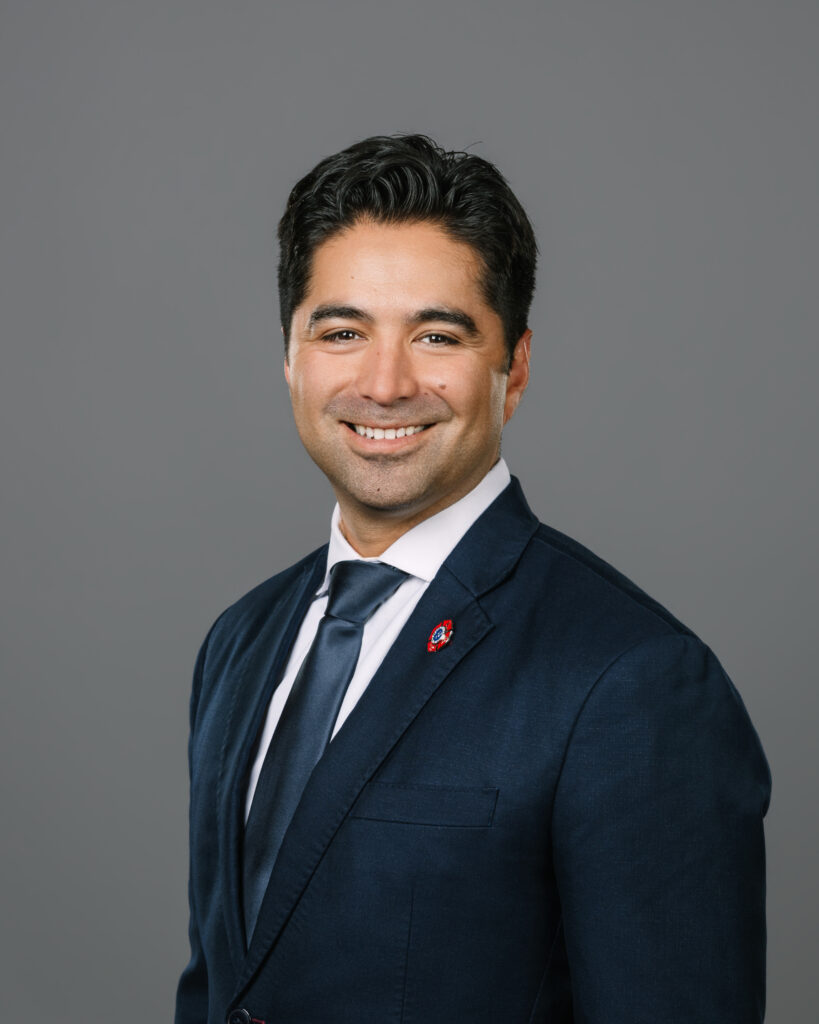
For Alan Rivas, the values he grew up with continue to shape who he is and how he participates in the fire service and our union.
Hispanic/Latino Heritage Month recognizes the cultures and contributions of Latino communities across the United States. For the WSCFF, it’s an important opportunity to learn more about our union’s members and the experiences that shape them.
This month we’re spotlighting Alan, a captain with South County Fire, Vice President of Local 1828, and co-chair of the WSCFF Diversity, Equity and Inclusion Committee. The committee, established by WSCFF Convention Resolution 21-03 works to give local union affiliates the tools they need to build and sustain a more diverse workforce by addressing barriers in recruitment, hiring, and retention .
Alan is a dedicated union member who gives time and energy to strengthen the WSCFF and support the members we represent. His commitment reflects what makes any union strong: members who help shape the organization for the future.
Alan’s presence in union leadership shows current and future firefighters that there is a place for them in the fire service, and in the conversations and decisions that help shape its direction.
Born and raised in Corona, California, Alan entered college as a business administration major but quickly realized he felt uninspired by the path in front of him. Looking back, he says he spent more time thinking about what was expected of him than what he actually wanted for his life.
That began to change in 2007, when the woman who would become his wife encouraged him to think seriously about his passions.
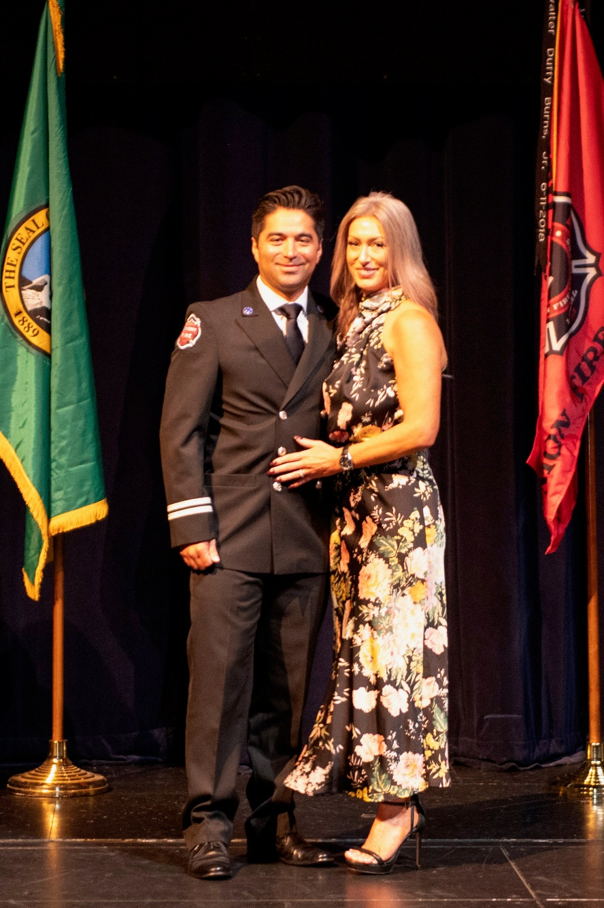
Alan and his wife, Chrissie
“I quickly realized that I really cared about a few things, a salary that can provide for my family, a career that allowed me to be present for my family, and work that made a difference.”
Firefighting had always interested Alan and once he took a closer look at the profession, the path clicked. “I had the realization that I should have been pursuing this career the whole time.”
He enrolled in an EMT course, worked for two years as a private EMT in the Los Angeles area, and later attended UCLA Daniel Freeman Paramedic School, completing his internship with LA City Fire. After working as a paramedic in Los Angeles, Alan moved with his wife and son to Washington. He worked for Rural Metro in Tacoma, volunteered with Riverside Fire in Puyallup, and later joined South Pierce Fire, Local 726, before lateraling to South County Fire, Local 1828.
What does Hispanic/Latino Heritage Month mean to you personally?
“Hispanic/Latino Heritage Month is a time of recognition of the diversity of being Latino and the multiple contributions that Latinos in America and around the world have provided.”
How has your heritage influenced the way you approach the fire service, your union, and the communities you serve?
“My heritage is what led me to the fire service, my parents always instilled in me the importance of working hard and making a difference in my community which made the fire service so appealing. I use my cultural experience at work when responding to emergencies and interacting in the community with people of different backgrounds, being aware of different cultural experiences and expectations and making sure that I serve in a manner that allows me to give the best service possible. In union work, I use my experiences and background to connect with members and ensure that our union is inclusive to all members regardless of their diversity.”
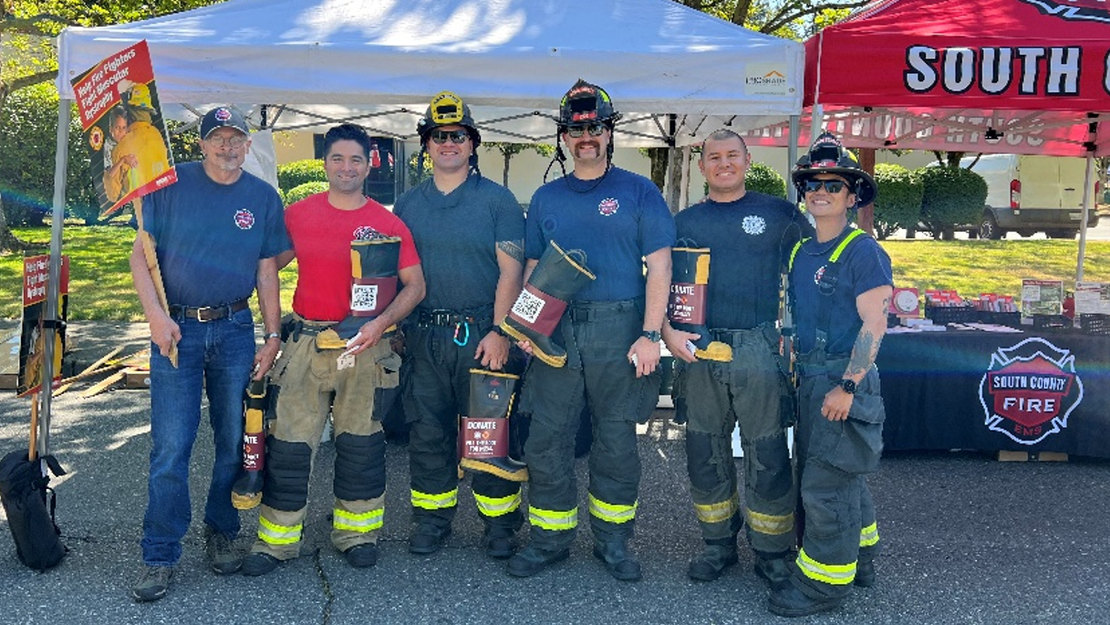
Alan with Local 1828 members gathering donations for MDA’s Fill the Boot fundraiser
What experiences led you to get involved in DEI work and take on a leadership role?
“I haven’t had a specific experience that led me to get involved in DEI work, rather, as I was obtaining my fire and EMS training and beginning my career, I noticed that there was a need to improve the inclusion of diverse backgrounds of all types. It wasn’t that people weren’t welcome in the stations, I believe most firefighters are always open and welcome anyone willing to work hard and excel. But we live with each other for a third of our careers, and it is important for us to be aware of others’ backgrounds and make sure our actions are as inclusive as we believe we are. My leadership role came as a surprise, I wanted to be involved and give back any way I could, and when the opportunity to co-chair the WSCFF DEI Committee was presented to me, I was honored but also scared that I wasn’t the right person. I am no expert, but I approach this work with the intent of building a better union for all our members.”
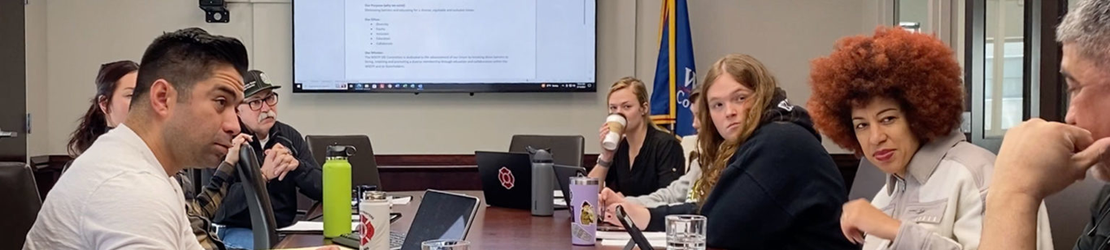
Alan meeting with WSCFF DEI committee members
What role do unions have in making sure members from different backgrounds feel represented, included and heard?
“Inclusion has been an important aspect of unionism since its beginnings, while some unions originally barred people of color and women, unions quickly realized that all workers unified are a stronger voice for workers’ rights. Today, it is just as important, as we see a shift in the number of applicants we are receiving and in the applicants themselves, it is imperative that we connect with our new members and ensure their participation in our union.”
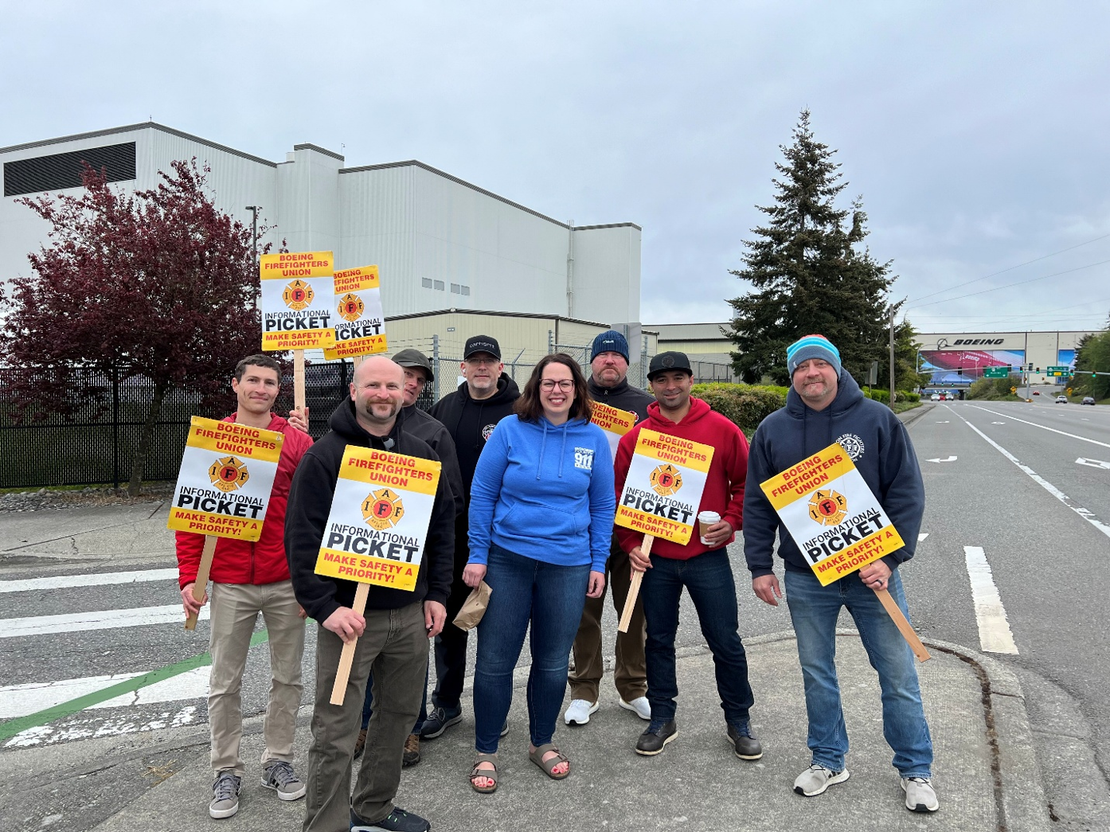
Alan picketing for the Boeing lockout in 2024
Why does representation matter in the fire service, and in union leadership and decision-making?
“Seeing yourself in others in places that you want to be is so important, being the first is scary, so when you can connect with your leaders you are more likely to imagine yourself in those roles. By seeking leadership and becoming a stakeholder in decision-making, you become the connection for others to see themselves and you have perspective on their experiences and ways to improve them.”
What would you like younger Latino community members to see as possible for themselves in the fire service and organized labor?
“My hope is that as younger Latinos see me in the community as a firefighter, paramedic, and company officer, they see that the fire service is a possible career option and place for them to succeed. When they see me as an involved member, I hope that they see that they too can be involved and give back to the union. I hope they see that their voices and experiences are important and bring value to the union.”