A serious burn injury can change life in an instant. The Washington State Council of Fire Fighters Burn Foundation exists to make sure survivors and their families don’t have to face what follows on their own.
The Foundation was created and is powered by WSCFF members who support people affected by burn injuries throughout the Pacific Northwest. Much of that work begins at Harborview Medical Center in Seattle, where Burn Foundation members connect with patients and families during an overwhelming time and help them find their footing as recovery begins.
That support continues beyond the hospital. The Foundation works to prevent burn injuries through education, helps connect survivors with resources, and creates opportunities for people affected by burns to build relationships with others who understand their experience. One of those programs is Camp Eyabsut, a summer camp where burn survivors ages 7 to 17 spend a week alongside their peers who have been through similar experiences.
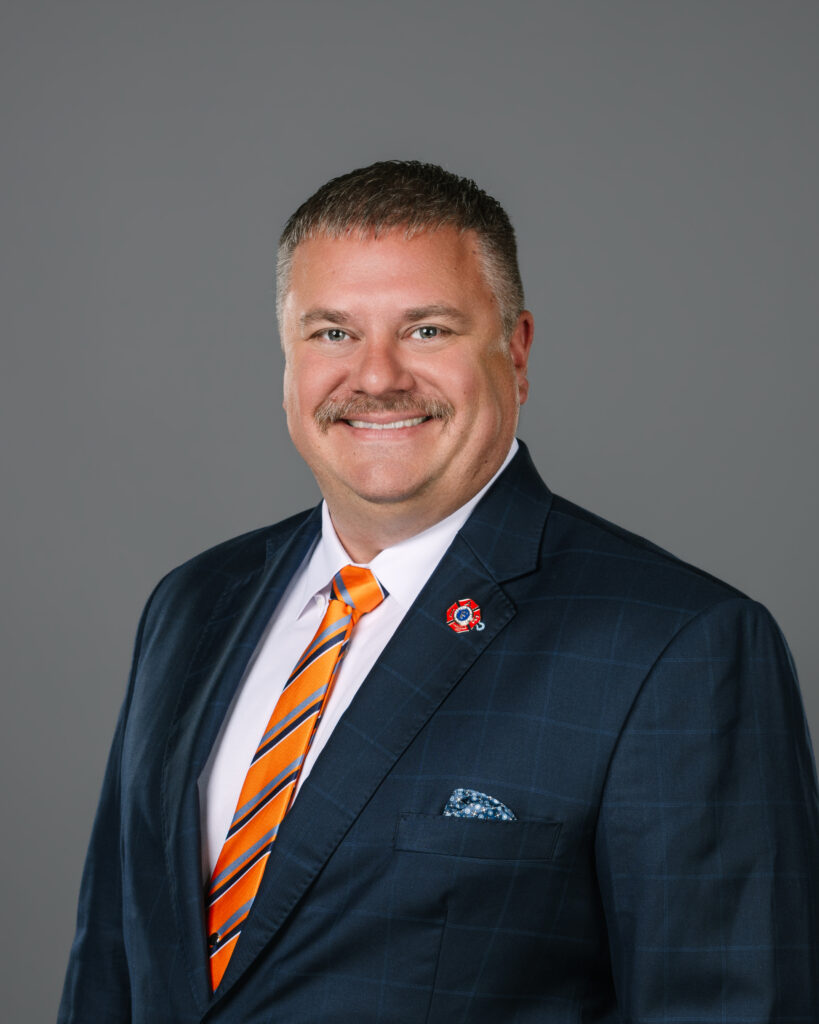
Helping lead that work is Dave Lamb, president of Local 828 Longview, and the WSCFF Burn Foundation’s new President.
Dave was born and raised in Longview and has spent more than two decades in the fire service. He started as an intern with the Longview Fire Department in 2002, went on to paramedic school and returned to Longview Fire in 2012. Today, he serves as a Captain on C-Shift.
Dave’s connection with the Burn Foundation is also personal. He first became involved through the Foundation’s Liaison Response Team after a member of his local suffered significant burn injuries. That experience gave him a firsthand look at what it means to have a resourceful team who understands the fire service present when victim sand families are facing the unthinkable.
For someone who has never heard of the WSCFF Burn Foundation, how would you describe what the Foundation is and the work it does? Who does the Foundation serve, and what kinds of support does it provide?
“The WSCFF Burn Foundation is a program that is served by an outstanding board that represents each WSCFF district in Washington State. Representing the 10 districts and the principal officers, we have an outstanding group that is dedicated to the mission: ’to promote the education and prevention of burn injuries and improve the lives of burn survivors.’ We do this by interacting with burn patients at Harborview Medical Center. Forging relationships with these patients helps us continue to assist them through treatment and into the rest of their lives (these can be patients from AK, WA, ID, OR, MT, UT).
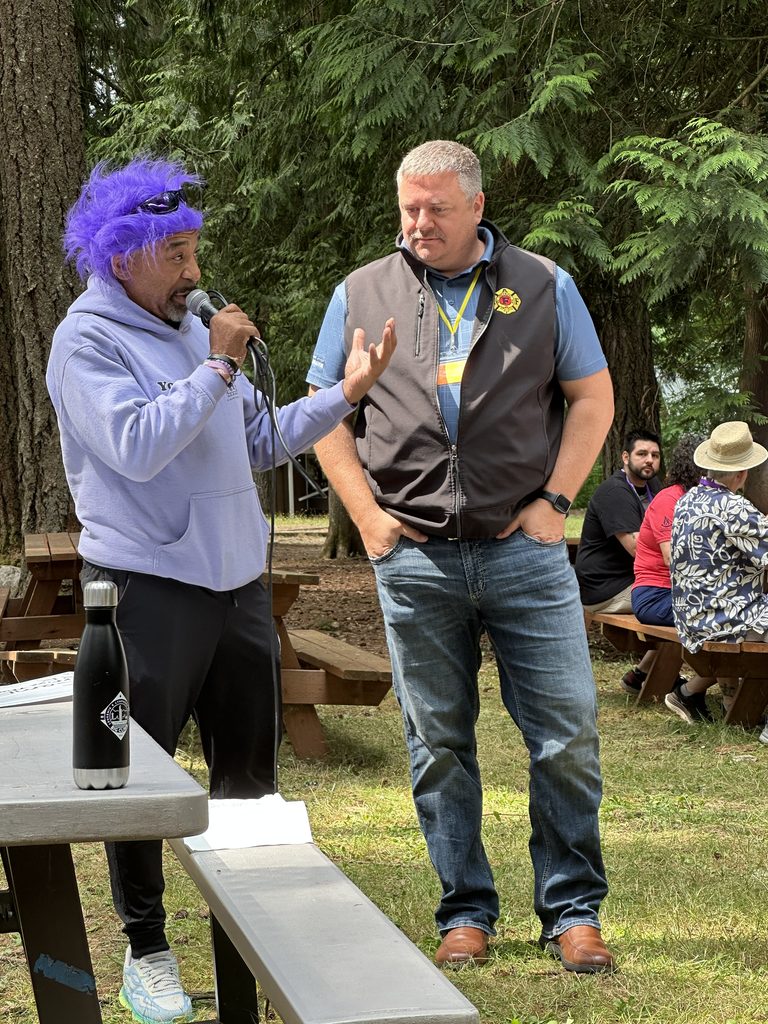
Dave Lamb with WSCFF Burn Foundation Camp Eyabsut director, Troy
For burn survivors who attend Camp Eyabsut the Foundation helps get them more involved in the week of camp during each summer. Allowing the kids who are otherwise teased or tormented for looking different because of their burn scars, to act like kids and enjoy being a kid.
We also provide assistance to our firefighting family when a firefighter or their family member is burned. WOur Liaison Response Team is available to help get families/members situated into the burn center at Harborview and navigate the challenges that they will face.”
What role does the Foundation play that people may not see or understand from the outside?
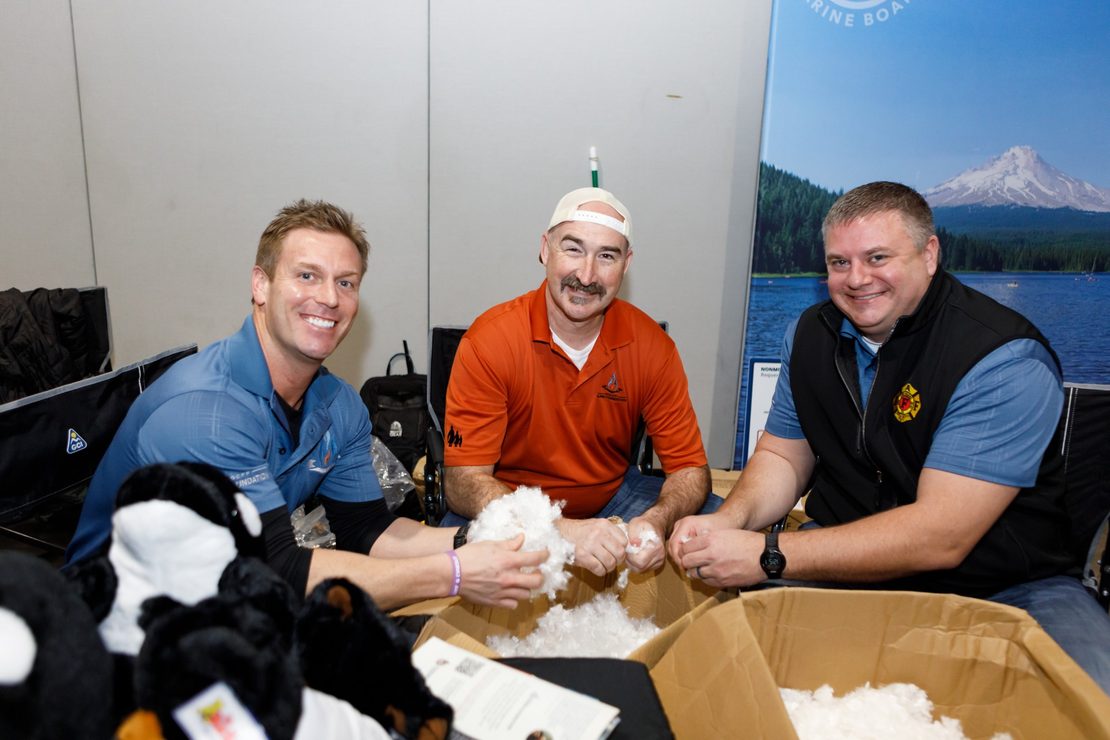
WSCFF Burn Foundation members stuffing teddy bears for donations.
“One of the biggest roles we play that people may not notice is our year-round outreach. Whether it is our Camp Director reaching out to future campers, Board members networking with other Burn Centers across the US/Canada, or working on potential new funding sources for our ever-growing programs.”
Why is this work important to the fire service?
As firefighters we are all fixers. When we go to work and have citizens calling 911 and experiencing the worst day of their lives, we are there to help them through it. It is very much a continuation of that care or service that we provide to the individuals we interact with in the Burn Foundation.”
What originally brought you to the Burn Foundation?
“I got involved through the Liaison Response Team. A member of my local sustained significant injuries from a house fire at his residence. Working closely with the Liaison Response Team, I was received at Harborview Medical Center by friendly faces who knew what was going on and how to relate to brothers and sisters trying to navigate through everything that was unfolding and in front of them. They were lifesavers; a resource that no matter what, were there for my members.”
What have you seen through your work with the Foundation that has changed or stayed with you personally?
“The relationships that we forge working with the board that is changing every year, making those bonds with others has created friends for life.”
What are some of the Foundation’s accomplishments or strengths?
“We have established new relationships with other Burn Centers in Oregon and Alaska, that have already paid off. A recent industrial incident here in Longview at Nippon Dynawave left multiple workers on-site burned by chemicals. Having that relationship with the Oregon Burn Center in Portland, Oregon helped streamline the care and treatment of those burn survivors.”
What do you wish more firefighters, departments, and members of the public knew about the Burn Foundation?
“The WSCFF Burn Foundation is ours, paid for mainly by our WSCFF per capita dollars. It is a way that we can give back to our citizens, our neighbors and our families to help take care of them in their time of need. Any department can set up a time to visit the Burn Center at Harborview, where they can come up to the unit and visit with burn survivors.”
What does WSCFF member support of mean to the Foundation and the people it serves?
“WSCFF member support allows us to continue to do this work. With ever-rising costs we could not complete our mission without the financial support that we receive from our brothers and sisters across the state.”
Where do you see the Burn Foundation going in the future, and what are you most excited about?
“In the future, I look forward to making new relationships in our state, across the 7th District, and with the IAFF. With over three dozen burn camps operating across the US and Canada, we all have a similar mission in mind. There is no reason to reinvent the wheel, if something is working well for another camp and it is something we can adopt and make our process better, then that is what we want to do. We will continue to seek additional funding sources through other charitable donations to continue growing our programs.”
If you could leave readers with one thought about the WSCFF Burn Foundation and its mission, what would you want them to remember?
“Burn survivors go through one of the most horrific and painful incidents that one can go through. The WSCFF Burn Foundation is about making sure no one faces a burn injury alone, from the moment of their injury, through their recovery and beyond, we are there for the burn survivors and their families-with support, resources, and a community that stays with them for the journey.”