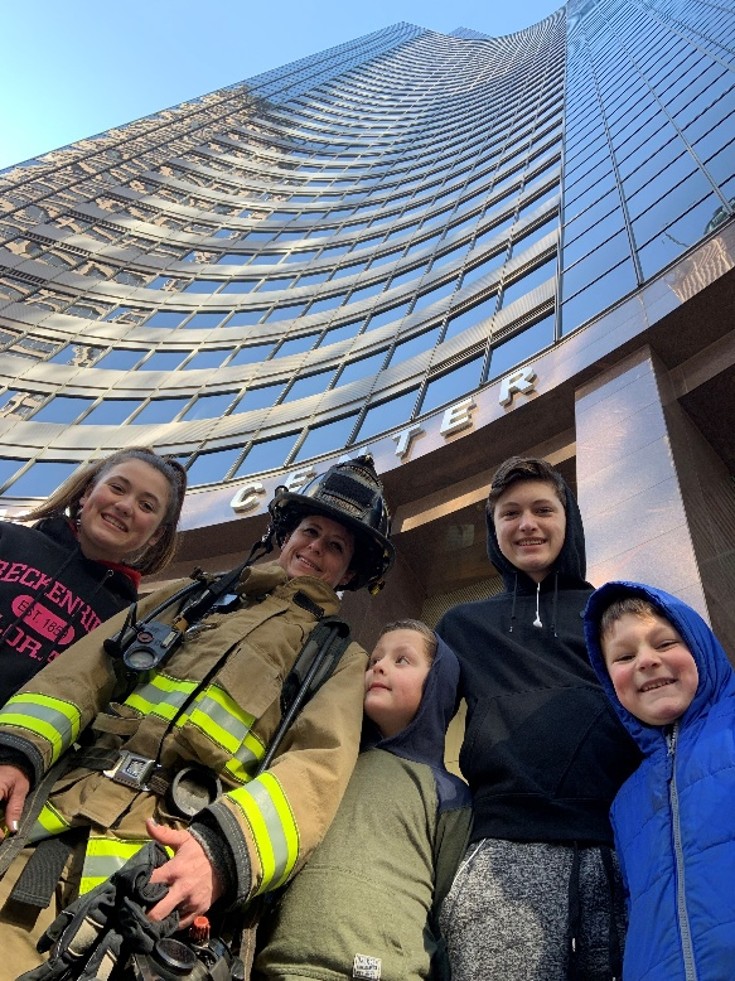
Think about the people in your life who create meaningful change for those around them. For the WSCFF and IAFF, Anna Melillo – Secretary-Treasurer of Local 3438 and a Firefighter/DO/Paramedic with North County Regional Fire Authority – is a leader who creates meaningful change for us all. She serves our members at both the state and national level as the IAFF District 7 representative on the IAFF’s recently formed Female Health and Safety Standing Committee, and as the WSCFF 8th District representative on the WSCFF Standing Behavioral Health Committee. Anna also brought Resolution 26-14, Establish WSCFF Female Health & Safety Committee, to the floor during the 2026 WSCFF Convention to support WSCFF locals through education, resource development, policy guidance, and information-sharing related to occupational health and safety issues affecting female firefighters.
Get to know Anna in her own words, and gain some inspiration from one amazing member’s journey to lifechanging advocacy:
Meet Anna Melillo
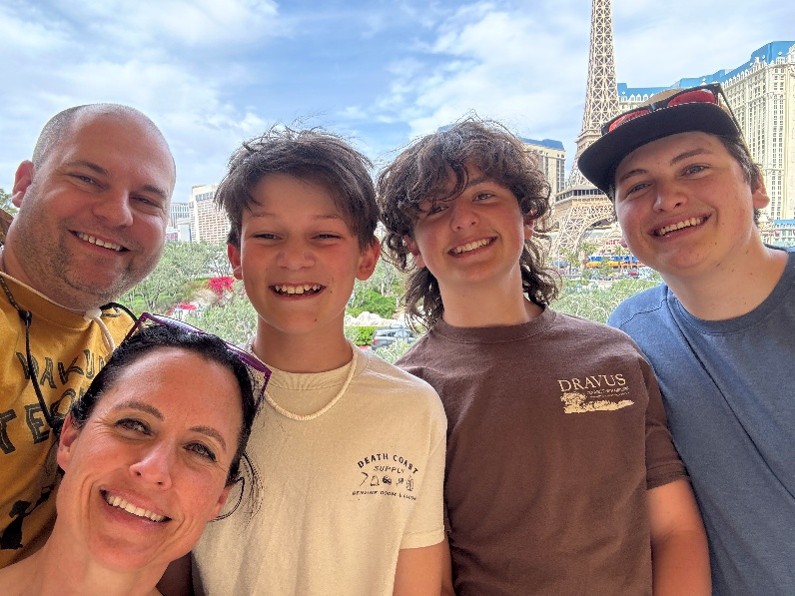
I live in Bellingham with my handsome husband, four kids, two extremely derp golden retrievers and a villain of a cat. While we occasionally enjoy the scent of patchouli, we also enjoy wearing deodorant and prefer tequila over IPA’s, so, don’t lean too far into the whole Bellingham vibe. I’ve been in the fire service since 2010 when a well-intentioned neighbor asked my husband at the time if he would consider volunteering at the station down the street. He declined, but I asked if I could instead. And so it began.
I started as a pager-at-home volunteer at Whatcom County Fire Department #18, mostly holding traffic signs on MVA’s and trying to remember how to do a patient work-up. From there, the awesome folks at South Whatcom Regional Fire Authority brought me on as a part-timer while I memorized the ‘complexities’ of the brick factory and human resources scenarios of National Testing Network/Public Safety Testing.
Eventually, I got hired full-time with Arlington Fire alongside a crew of hunter-gatherer types who seemed to be born knowing how to field dress an elk and rebuild a transmission. In 2021, when the City of Arlington decided we were too expensive to keep around, we merged with North County Regional Fire Authority.
I’ve proudly been in the union since my first day as a full-time hire.
What first drew you to the fire service, and what has kept you committed to it?
I’m old enough that firefighting wasn’t exactly presented as a viable career path for women when I was growing up. I went to Western Washington University, earned a degree, and started a masters in teaching. Then I got pregnant.
That experience clarified one very important thing: I did not want to manage 30+ small humans in a room all day. My respect for teachers skyrocketed, and my career trajectory took a sharp turn.
I landed in a few standard, soul-numbing office jobs while raising toddlers. Volunteering in the fire service initially sounded interesting — something different, something meaningful. But once I started, it wasn’t a question of if I wanted to do this. It became, “How do I make this my career?”
To be fair, there was a brief moment of reconsideration when I was pregnant with my third child during academy. Nausea and persistent tachycardia are not exactly performance enhancers.
These days, I like to point out that my son technically completed academy before he was born — which should count for something. That early exposure didn’t translate into career ambition, however, as he currently has a negative 10% interest in the fire service..
My oldest just started part-time in the fire service – having had to go to academy on his own — so if anyone out there is hiring FT, he’s a solid candidate. Good work ethic, decent sense of humor… I might be slightly biased, but only slightly.
I digress. Like most of us, once I got into this job, everything else felt… underwhelming. No offense to the rest of the working world, but it’s hard to compete with this profession.
Was there a moment early in your career that changed how you saw the job or your role in it?
Starting in my thirties meant I learned fairly quickly that it doesn’t matter how you do something — someone else does it differently, and they will absolutely have an opinion about it.
I also learned that no one wants to:
- Admit they don’t know something
- Go first
- Mess up in front of everyone
- Be talked about behind their back
- Appear weak
- Or stand out
I’ve had the “opportunity” to be that person more times than I can count. And after a while, I realized maybe there’s value in having that person around.
When you don’t fit the traditional 6’1” linebacker who clearcut-the-back-40-with-dad mold, you’re forced to approach the job differently. Sometimes that leads to alternative techniques — maybe even smarter-not-harder ones.
I’ve come to embrace the black sheep role. And if that helps create space for others who don’t fit the stereotype, then I’m happy to keep wearing the wool.
Before getting involved in union work, how did you view the union’s purpose? How has that perspective changed?
Public Service Announcement: As a society, we do a terrible job educating people about unions and what they actually do. Most of us don’t learn about unionism until we’re already in one.
Once I became involved and saw firsthand the sheer volume of work our union does — for our wages, our benefits, our safety, our families, our profession — I couldn’t believe how little I understood before.
The protections and standards we benefit from didn’t appear out of thin air. People fought for them. People sacrificed for them. And now we often treat them as baseline expectations.
When someone is anti-union or supports right-to-work policies, I’ve learned to assume it’s usually a lack of exposure, not malice. Which means it’s on us to educate — our coworkers, our families, our kids — about what it took to secure the benefits we rely on every day.
Because we probably shouldn’t expect already overworked teachers to cover that too.
The more you know. (Yes, that was a Reading Rainbow reference — I’m old.)
The IAFF’s Female Health and Safety Standing Committee recently formed (this last year!) What need did you see that made you want to be part of it?
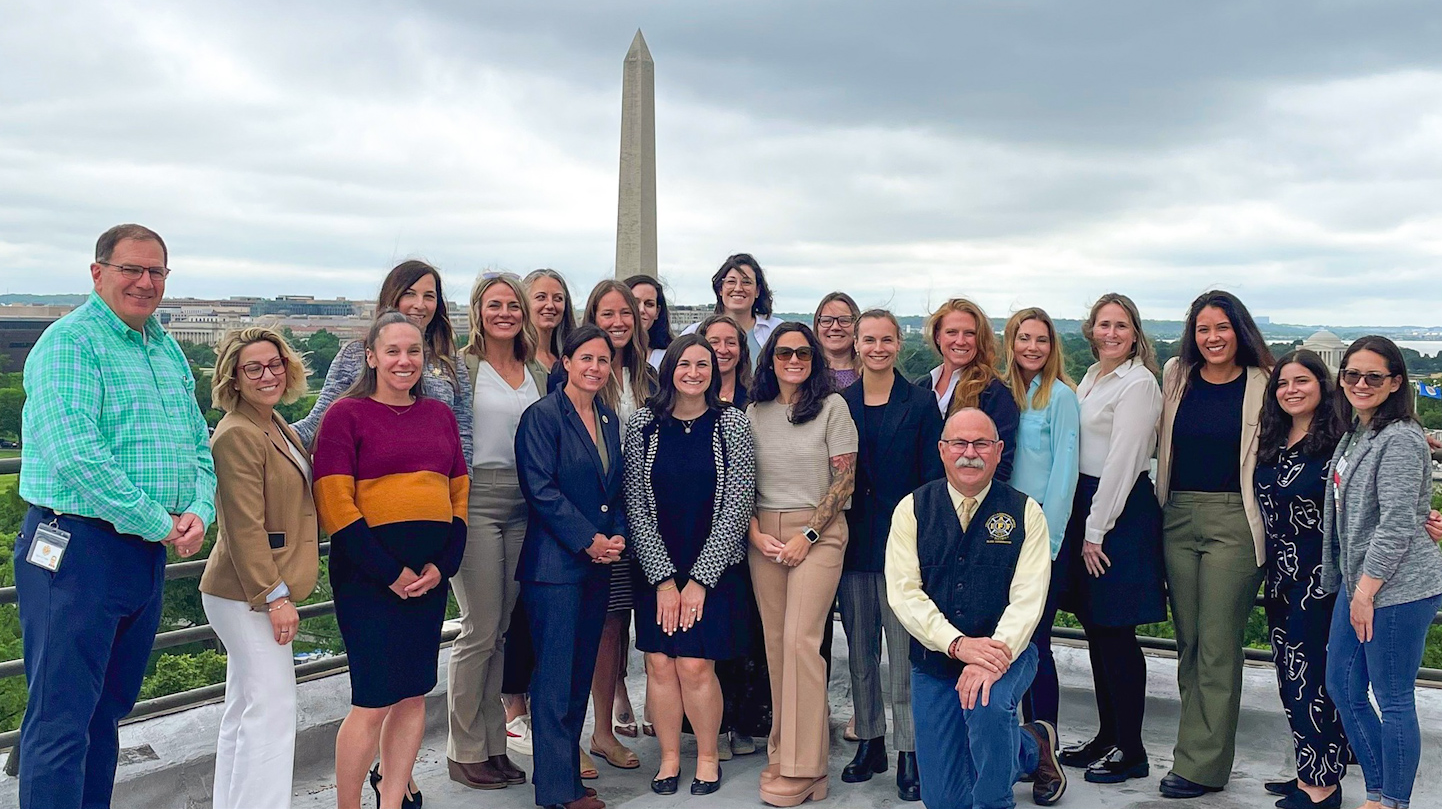
Women make up roughly four percent of the IAFF fire service. When you’re working with numbers that small, the ripple effects are real: limited data, minimal research, gaps in legislation, inconsistent education, and almost no coordinated outreach specific to women in the job.
That doesn’t mean the issues aren’t there — it just means they haven’t been prioritized.
There are practical, achievable changes that would make this profession more equitable without lowering standards or changing expectations. The goal isn’t special treatment. It’s a fair playing field.
Please explain the standing committee’s mission, and your involvement
The committee’s mission is to identify and address research gaps, PPE inequities, national standards discrepancies, and reproductive health and culture-related issues within the fire service.
In plain terms: we’re looking at where structural barriers exist that create uneven health and safety risks for female firefighters — and working to fix them.
As the District 7 representative (Washington, Alaska, Montana, and Idaho), I serve as your point of contact and district resource. I’m responsible for understanding the specific challenges within our region and bringing those forward at the national level.
I also sit on the Logistics and Outreach subcommittee, which means helping connect members to information, resources, and — ideally — solutions.
What would you like to say to women in the fire service/ and the union?
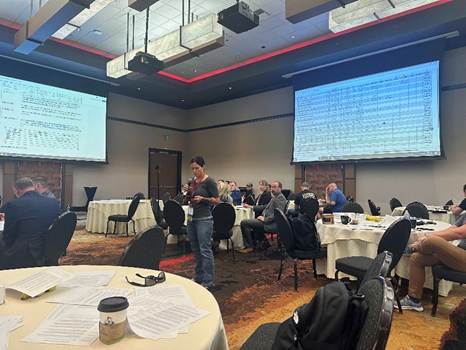
Ma’am — yes, I’m talking to you — you absolutely can, and you absolutely should. Whatever “it” is.
Apply for the spot. Take the test. Raise your hand. Sit at the table. Run for the position. Try the thing that scares you a little.
You have no idea who’s watching you to figure out what’s possible for themselves.
I still regularly surprise myself with what I can handle. The only difference between the things I’ve done and the things I haven’t? At some point, I decided to go for it — usually while slightly terrified.
Courage doesn’t mean you’re not nervous. It just means you move anyway.
So go show yourself what you’re capable of. And while you’re at it, show the mentees you know — and the ones quietly watching from the sidelines — what’s possible.
What practical changes would you like to see come from this committee’s work?
More research. More legislation. Better PPE. More education. More outreach. Nothing flashy- just measurable progress.
How do stronger health and safety standards improve the fire service as a whole?
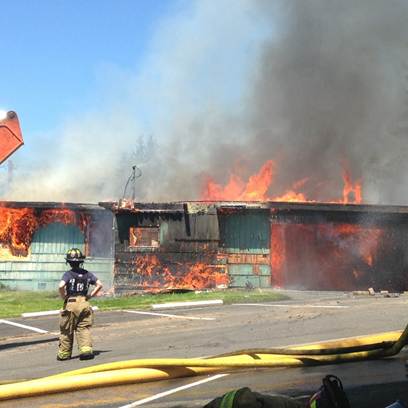
Every human body is built differently. Expanding PPE sizing and fit options isn’t just about “female body types.” It benefits anyone who doesn’t fall into a narrow equipment template.
Research into fertility impacts, hormone fluctuations, cancer rates, and long-term health outcomes isn’t gender-specific — it’s human-specific. The more we understand how this job affects the body, the better we can protect everyone who’s doing it.
Advocating for maternal protections also strengthens parental rights across the board. Women didn’t exactly win the biological lottery — we’re just the ones stuck with the plumbing required to grow the baby. That reality shouldn’t mean choosing between career longevity and family planning.
Right now, many female firefighters bank sick leave for years, work longer into pregnancy than they should, and return sooner than they’re ready — largely because departments and governing bodies haven’t fully addressed it. Pretending it’s rare doesn’t make it nonexistent.
History shows us what happens when worker safety is ignored. In 1911, 146 garment workers — 123 of them women — died in the Triangle Shirtwaist Factory fire after being locked inside their workplace to prevent them from taking breaks. Public outrage led to sweeping reforms: new safety standards, labor laws, and protections that still shape workplaces today.
We don’t need tragedy to justify progress.
When we fight for better standards for one group, we strengthen protections for everyone. That’s not special treatment. That’s unionism. And when we win for one, we win for all.
What led you to become involved with the WSCFF Behavioral Health Committee?
One name: Drew Shannon.
When Drew came to Arlington Fire, he was already carrying significant PTSD from previous traumas. Looking back, he was probably the first person who made me truly understand that this job can — and often will — take a toll on your mental health. And more importantly, that acknowledging it and doing something about it is a sign of strength, not weakness.
Drew fought hard to manage what haunted him. But ultimately, he took his own life.
His death devastated me — especially because not long before that, I had lost another incredible friend and firefighter, John Garner from Central Pierce Fire & Rescue, in the line of duty. Two very different losses. Same crushing weight.
Like anyone, I replayed my last conversations with Drew. I asked myself the same question we all do: Was there something I missed? Something I could have said?
The more I talked about it, the more I realized this wasn’t unique to me. The stories started surfacing. The struggles. The near misses. The quiet suffering.
I didn’t want to just carry that — I wanted to do something with it.
What does your work on the BHC look like in action?
I represent the WSCFF 8th District (North Snohomish County to the Canadian border) and serve as a point-of-contact for Peer Support teams in the area.
Practically speaking, that means helping locals with:
- Team development
- Individual training guidance
- Continuing education topics
- Resource navigation
- Building or strengthening peer support programs
At the committee level, we review new platforms, track legislative changes, evaluate outreach strategies, and work on improving education access.
We’re also building out the Behavioral Health section of the WSCFF website to make it more user-friendly and to centralize resources for members who want to start or grow peer support teams. The goal is simple: make it easier to ask for help — and easier to offer it.
What still needs to change in how we talk about behavioral health in the fire service?
The WSCFF and IAFF have done an incredible job increasing awareness and providing resources. But culture doesn’t change from PDFs and PowerPoints alone.
Real change happens at the kitchen table.
It happens when:
- A senior firefighter admits a call hit harder than expected.
- An officer mentions they see a therapist.
- A respected member checks in on someone who seems off.
- Someone says, “That one stuck with me,” and no one rolls their eyes.
We all know we perform better when we train hands-on — not when we click through TargetSolutions at 2200 the night before it’s due. The same principle applies here.
This job works because we function as a team. A family. Not as isolated individuals pretending we’re invincible.
Admin and state organizations can push resources all day long, but if we’re not modeling healthy behavior locally — in our own houses — the stigma won’t move. It’s time for all of us to step up.
What motivates you to step forward and get involved?
Attending the New Members Conference in 2017 was eye-opening. I realized how little I understood about what our union does for us.
The Executive Leadership Series deepened that perspective. Learning the history of labor struggles in this country — the setbacks, the wins — and seeing what other states are still fighting for made me appreciate what we’ve secured here in Washington.
Serving as a Fire Commissioner added another layer. I saw firsthand how filtered information can be at the decision-making level. How easily a misunderstood concept can get buried. How overextended administrative staff are.
In union meetings I see how few people attend, and how even fewer raise their hands to help. How the same five people end up doing all the work.
Now, with federal funding shifts and increasing political volatility, I see hard-fought protections sitting on unstable ground. That should deeply concern all of us.
We can either stick our heads in the sand and hope someone else protects what generations before us built — or we can step up.
I’m proud I can say I work in a profession that doesn’t wait for someone else to fix the problem.
What is something members might not realize about the effort behind union work?
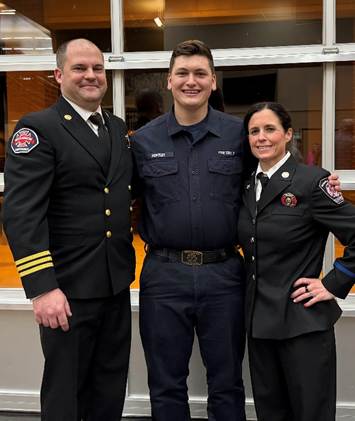
It never stops.
Union work doesn’t happen during “free time.” It happens in the margins — between calls, after meetings, at the dinner table, during kids’ games, late at night when someone needs help.
Every time you call or text a union officer, they’re stepping away from something else — their family, their job duties, their limited downtime — to support you.
And they’re happy to do it.
But willingness doesn’t mean capacity is unlimited.
There is always more work to be done than there are hands to do it. The more members who get involved — even in small ways — the more sustainable it becomes.
Unionism isn’t a spectator sport. It’s a team effort.
What have you learned about leadership through this work?
Real leaders are the ones people have learned — over time — they can respect. They consistently show they want what’s best for you. They help you reach your potential. They correct without humiliating. They encourage without micromanaging.
In my opinion, the best leaders in this industry aren’t the ones yelling that you’re doing it wrong or talking behind your back. They’re the ones who let you struggle just enough to grow, step in when it matters, and offer critiques that actually make you better.
They don’t demand to be in charge — they just are.
They don’t demand respect — they’ve already earned it.
At the end of the day, the red helmet doesn’t mean much if the person wearing it hasn’t earned it with their people.
I’ve also learned there are many different types of leaders — and most people have some form of leader in them. Sometimes it just needs a nudge. Watching someone step into that and flourish is one of the most satisfying parts of this work.
Have there been experiences, on or off the job, that shaped your commitment to advocating for others?
I grew up watching my parents spend their free time helping elderly neighbors, feeding stray animals (seems like ALL of them), and supporting unhoused people with food, clothing, and shelter. Service wasn’t something they talked about — it’s just what they did.
That example stuck.
I see it when I feel proud watching a coworker treat a homeless patient with dignity and patience. I see it when I casually suggest there might be more going on with someone having an off day than what’s visible on the surface. I feel it when a conversation starts heading toward racism or sexism — and someone redirects it.
One of my favorite recent moments was calling out the phrase “that’s so gay” used as an insult. My son is gay — and he’s honestly one of the most courageous humans I know. Adjusting our language isn’t some massive hardship. It’s a small shift. And words matter — especially when someone you love is within earshot.
Advocacy doesn’t always look dramatic. Sometimes it’s just refusing to let small harm slide.
How has your union involvement influenced your life?
Union involvement changed how I see a lot of things.
I don’t take our benefits for granted. I know people fought for them. Some died for them. None of this was handed out because a company felt generous.
History shows us that without collective pressure, most employers won’t voluntarily offer living wages, safe working conditions, or meaningful leave. People stood on strike lines while their families starved — not because it was fun and easy, but because it was necessary.
That perspective reshaped how I think about work, power, and responsibility.
The sum of us is so much more powerful than the select few making decisions at the top. When we’re reminded of that — and when we organize around it — we can create massive, positive change.
What keeps you grounded when the work feels heavy?
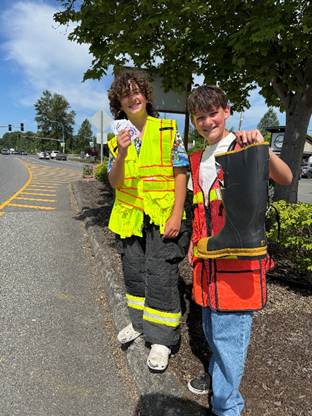
Mostly my husband, Tony.
As a former union overachiever and firefighter, he understands the “why” behind what I commit to. Even though he’s crossed over to the “dark side” of Chiefdom, he remains one of the strongest advocates for union rights we have out there.
He also makes me laugh. A lot. That’s critical for my mental stability.
Our kids are endlessly entertaining, and their personalities remind me every day that there’s still a lot of good in this world. They’re naturally empathetic, care about the environment, and include everyone without even thinking about it — DEI isn’t some inconvenient policy to follow, it’s just how they roll. Helping others doesn’t feel like a sacrifice to them and watching that in action fills me with hope for the future.
We’re also intentional about scheduling joy. Literally — it goes on the calendar. Concerts, off-roading, good food, chasing sunshine, unplugging from the heavy things for a little bit.
What would you say to someone who cares about these issues but is unsure how to get involved?
Don’t be shy. Reach out.
One of the best things about the fire service — and the union — is that someone always “knows a person.” If you’re interested, start asking around.
And let’s be honest: most of us still say we got into this job because we wanted to help.
Getting involved in your union is helping. In ways you might not even see yet.