
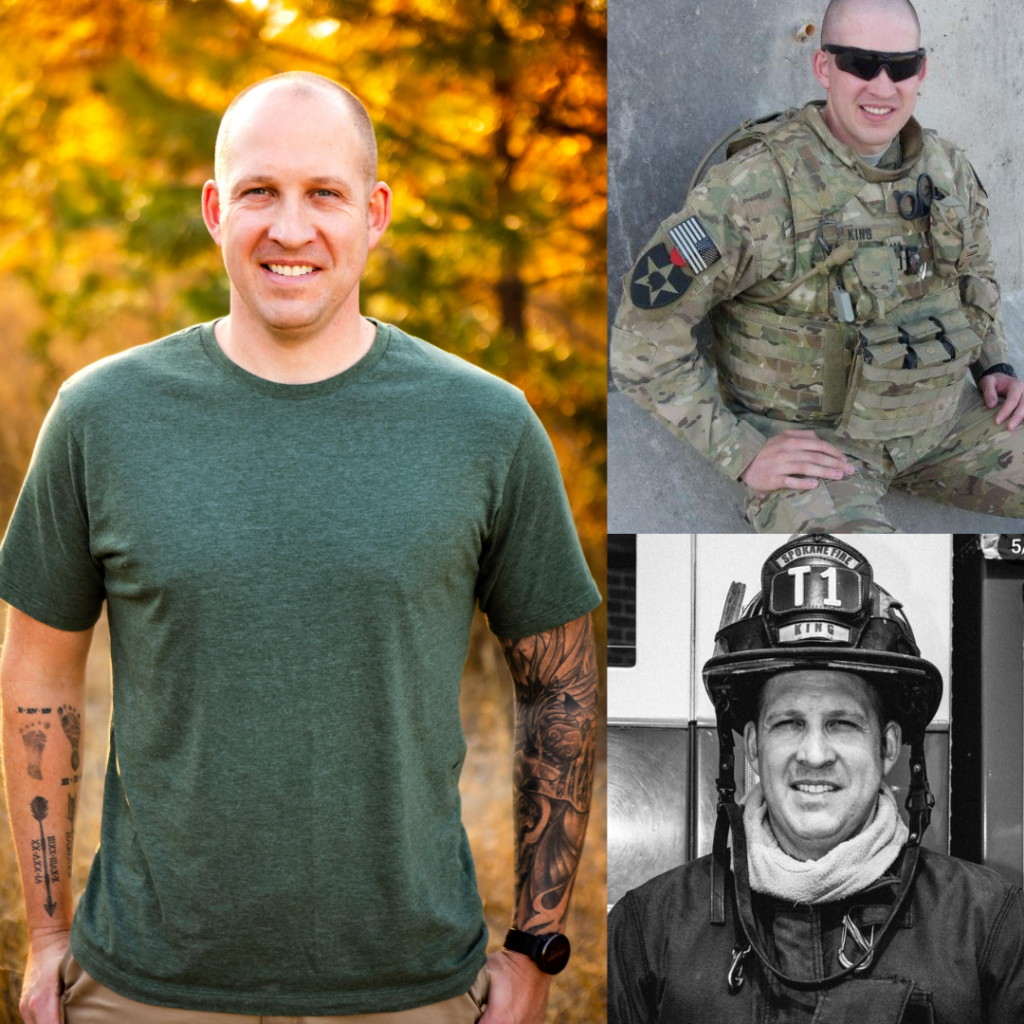
Behavioral health affects every corner of the fire service, but too many members still feel pressure to keep their struggles to themselves. Read Jason King’s journey in his own words: Local 29 Spokane firefighter, Army veteran and WSCFF Behavioral Health Committee member.
We thank Jason for sharing his perspective and helping move this conversation forward.
___
Some dreams begin with inspiration. Others begin with tragedy. Mine started with a cat, a swarm of angry wasps, and a fire engine.
I was 10 years old when my family moved into a new house. Like cats apparently do when boxes appear and life gets chaotic, ours decided to make a break for freedom. My dad went out to bring him back and accidentally disturbed a wasp nest in the process. Within seconds he was swarmed.
Then everything changed.
My dad went into anaphylactic shock. My mom called 911, and suddenly our house transformed into a place of panic and fear. I remember the terror of watching adults around me realize something was very wrong.
But I remember something else, too.
The firefighters arrived and moved with a calmness that felt almost impossible. No panic. No chaos. Just confidence. One firefighter—an engineer, I know now—guided me and my three siblings over to the fire engine and started showing us around.
At the time, I thought I had won the lottery. A giant red truck? Buttons? Lights? Ten-year-old me thought this was the greatest day of my life under some very weird circumstances.
Now I understand what he was doing. He was distracting us. Keeping four scared kids focused on something other than the possibility of losing their father. That moment stayed with me. While my family was experiencing one of the worst moments of our lives, those firefighters stepped into our chaos and brought calm. Right then, at ten years old, I knew what I wanted to become.
I wanted to be that person for somebody else.
Fast forward to high school graduation. I started attending community college to pursue a degree in Fire Science while working on an ambulance as an EMT in California’s Bay Area. I applied everywhere. And when I say everywhere, I mean everywhere. At one point, I literally slept on concrete outside Los Angeles City Hall just to submit an application. Nothing says “future public servant” like sleeping on a sidewalk hoping someone notices your commitment. For four years I chased that dream. Application after application. Interview after interview. Rejection after rejection.
I never even made it to a chief’s interview. The discouragement started settling in. I had spent years believing this was my calling—the thing I had been moving toward since that day with my dad—and now it felt like every door remained shut.
I reached out to mentors and firefighters I respected and asked what I could do differently.
One lieutenant told me that many candidates ahead of me had veterans’ preference points. At the time, I had no idea what that even meant. I was newly married. I had never planned on joining the military. The closest I had come to Army life was probably watching movies and thinking, “That seems difficult.” But my wife and I prayed about it. We talked with friends serving in different branches and eventually decided that joining the Army might be the right path—not only for our family, but possibly for the career I still felt called toward.
So, in 2011, with my wife a few months pregnant, I left for basic training.
Life accelerated after that.
I completed training as a 68W Combat Medic, received orders to Fort Lewis, joined 2nd Infantry Division, went home on leave long enough to watch my son be born, moved my wife and newborn son to Washington—
—and then reality hit.
I signed back into my unit and was handed deployment papers. Three months. Three months until Afghanistan.
I knew deployment was always a possibility. Every soldier does. But knowing something can happen and being told it’s happening now are two very different things. Suddenly every fear became louder.
I looked at my three-month-old son and wondered what I was leaving behind. I looked at my wife and wondered what I was asking her to carry alone. Then I boarded a C-130 and headed for the sandbox.
I had no idea that the next nine months would permanently alter the way I saw humanity. Or myself.
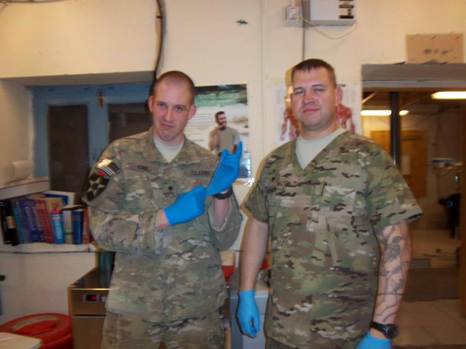
As a line medic for the Brigade Command Staff Security Detail, our mission was “winning hearts and minds.” We traveled through villages helping local communities rebuild while also serving as a quick reaction force when attacks happened.
Some days involved school supplies and rebuilding projects.
Other days involved gunfire.
IEDs.
Chaos.
Death.
Then came the day that changed everything. We were delivering school supplies to a village. Just another mission. At least that’s what I thought. As our team started dismounting from the Stryker, I heard commotion behind me.
I turned.
Then the world exploded.
A suicide bomber detonated his vest.
The blast threw me into the side of the Stryker and knocked me unconscious.
When I came to, everything sounded distant at first. Ringing. Screaming. Confusion.
Then I heard someone yelling:
“Medic!”
Me.
I was the medic.
I looked around and saw destruction everywhere. Smoke. Dust. People screaming.
One of my teammates had been closest to the blast. She had lost both legs and an arm.
I dropped beside her and did everything I knew how to do. Everything training had taught me. Everything I had spent months preparing for.
Pressure.
Tourniquets.
Interventions.
Hope.
I fought for her life with everything I had.
And I lost.
No amount of training prepares you for the moment you realize you cannot save someone.
No amount of strength prepares you for the helplessness that follows.
That day didn’t end when we left Afghanistan.
For years, it followed me home.
When I returned stateside, I knew something wasn’t right.
But during reintegration, I lied.
I checked the boxes.
Said I was fine.
Because I wanted to go home.
Over the next few years, PTSD started making itself known, but I became an expert at pretending otherwise. I told my wife I was fine. Told my friends I was fine.
I wasn’t.
I drank myself to sleep most nights because alcohol felt easier than memories.
My wife saw through all of it.
She saw the nightmares.
Saw the anger.
Saw the man pretending to hold himself together.
She encouraged me to seek help.
I even approached my platoon sergeant once about mental health resources.
He looked at me and said, “If you can’t handle it, then you’re not welcome here.”
So I stopped talking.
Stopped asking.
And kept sinking.
Then in 2015, I got hired by the City of Spokane Fire Department.
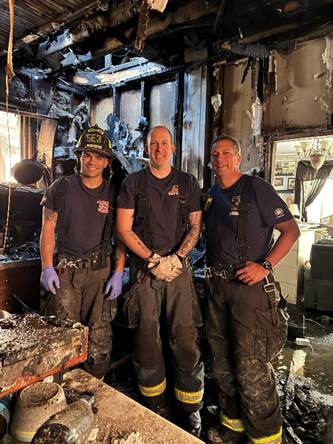
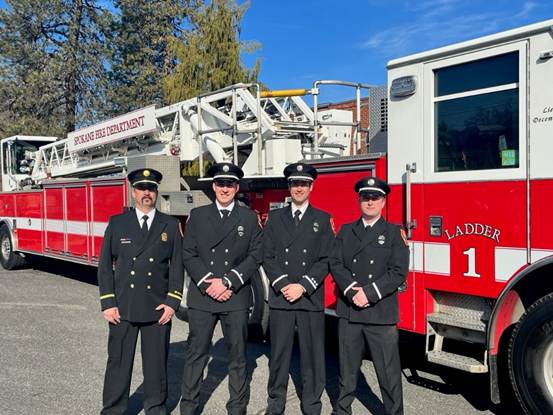
I had finally made it.
I remember thinking, “This is it. Everything gets better now.”
Turns out trauma doesn’t care about dream jobs.
It comes with you.
Years later, during an extrication call involving a woman crushed beneath a vehicle, everything I had spent years burying exploded back to the surface.
The fear.
The helplessness.
The realization of how fragile life really is.
I came apart on-scene.
Argumentative.
Angry.
Overwhelmed.
Watching myself unravel and not understanding how to stop it.
That was my wake-up call.
Because this time I knew exactly where I was headed.
And I knew I couldn’t survive another round alone.
So, I finally walked into the VA (U.S. Department of Veterans Affairs).
I eventually connected with a provider who listened, advocated for me, and helped me begin untangling years of trauma.
At first, I clung to my Traumatic Brain Injury (TBI) diagnosis because I wanted a reason. Something concrete. Something I could point to and say, “That’s the problem.”
Therapy? I wanted absolutely nothing to do with it.
Talking about trauma sounded miserable. Then I heard a line on a podcast that said, “Therapists understand how the brain responds to trauma. They don’t have to be blown up to understand what being blown up does to a person.”
That hit me hard.
Something shifted.
So, I finally started talking.
Months of therapy turned into years of healing. Slowly, I began realizing that my brain had been living in fight mode for so long that I had forgotten what peace even felt like.
My therapist—bless her—was somehow every bit as stubborn as I was.
She refused to let me quit.
And eventually, things changed.
I stopped living in Afghanistan.
I stopped reliving the worst day of my life every day.
I started remembering that alongside fear and loss, there had also been friendship, purpose, and moments worth carrying forward.
Healing didn’t erase memories.
It changed my relationship with them.
In 2020, I became the coordinator for Spokane Fire’s Peer Support Team. Because after years of suffering in silence, I learned silence never saves anyone.
We see things in this profession that human beings were never designed to carry alone. We see tragedy. We smell it. Hear it. Feel it.
Shift after shift.
Call after call.
And eventually the weight catches up.
It’s okay to not be okay.
What’s not okay is suffering alone.
I went from being someone who was angry and miserable to being someone who genuinely loves life again. I became a better husband. A better father.
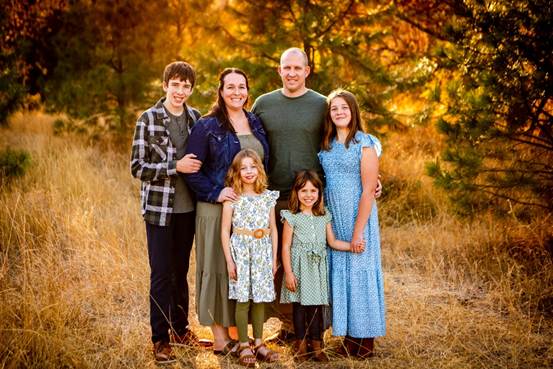
Now when my wife or kids are struggling, I don’t tell them to “suck it up.”
Turns out, that wasn’t great counseling advice.
Who knew?
Therapy changed my life.
Peer support changed my life.
People who were willing to walk beside me changed my life.
So, if you’re struggling, talk to someone.
A therapist.
A friend.
A peer supporter.
Anyone.
Because silence nearly took everything from me.
And asking for help gave it back.
Be safe.
Break the stigma.
__
Learn more about the WSCFF Behavioral Health Committee, learn tools, and find resources here.